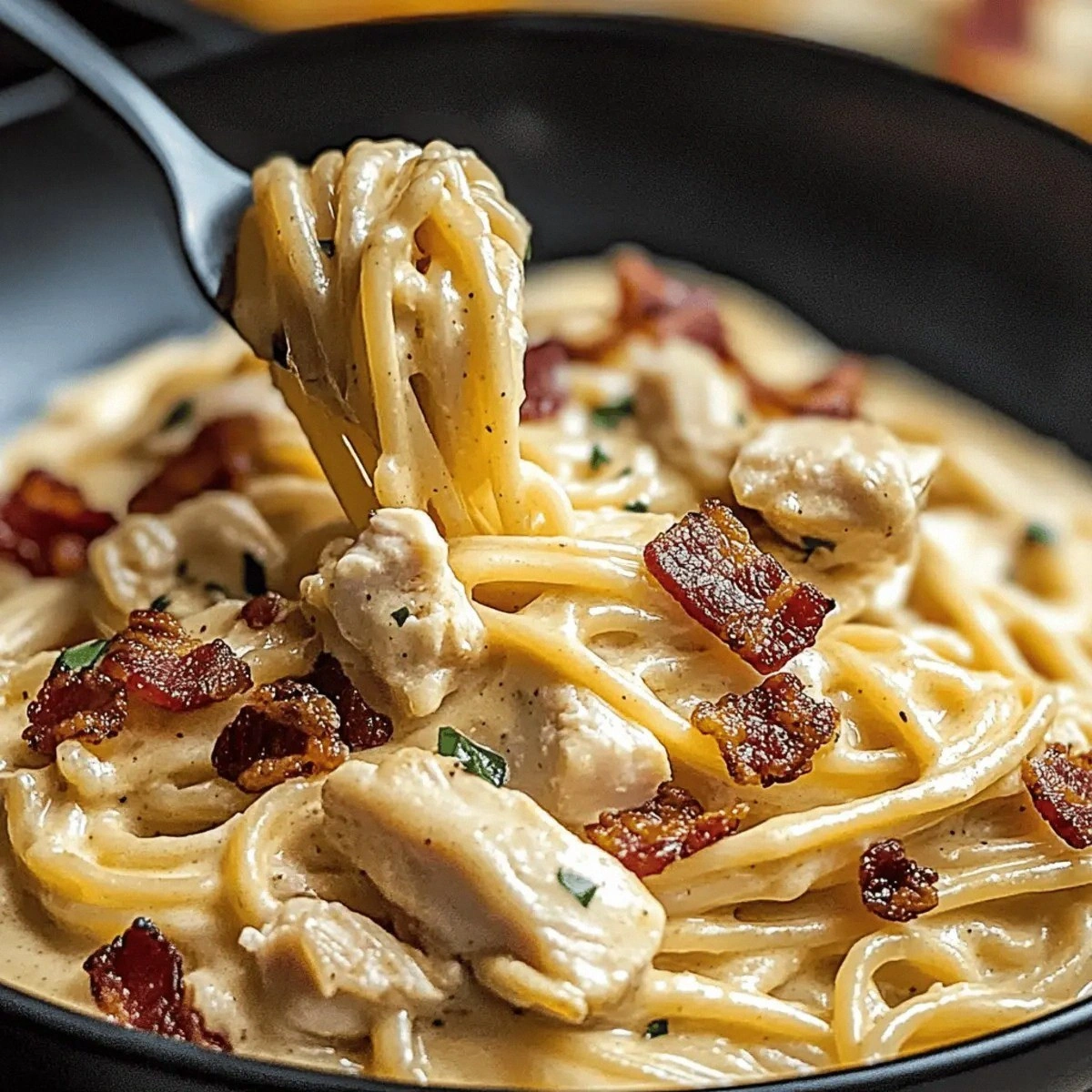
I still remember the night I ruined three batches of carbonara before stumbling into this version. It was past midnight, my roommate was hovering like a vulture, and the kitchen looked like a flour bomb had detonated. The first attempt curdled into scrambled egg soup. The second glued itself to the pan like cement. By the third, I was ready to surrender to a frozen pizza fate. But something magical happened when I ditched the traditional rules and let the ingredients speak for themselves. The sauce came together like silk, the chicken sang with crispy edges, and the bacon—oh, the bacon—turned into smoky shards of pure joy. My roommate actually did a little dance right there on the tile floor.
That night changed everything. I discovered that the secret isn't in following some ancient Roman doctrine—it's in understanding what each ingredient wants to become. The cream doesn't just add richness; it creates this luxurious blanket that hugs every strand of pasta. The chicken isn't just protein; it's the crispy counterpoint that makes the creamy sauce feel even more indulgent. And the bacon? It's not just smoky seasoning; it's the flavor bomb that ties the whole dish together like a warm hug from your favorite person.
Picture this: it's raining outside, you've got your favorite playlist humming, and the smell of garlic hitting hot bacon fat fills your kitchen like the world's best aromatherapy. The pasta water is rolling at a happy boil, and you're about to create something that'll make you feel like a five-star chef in your socks. This isn't just dinner—it's a mood, a moment, a memory waiting to happen. I dare you to taste this and not go back for seconds. Actually, I dare you to make it through the first serving without already planning tomorrow's leftovers.
What makes this version different? We're throwing out the rulebook that says carbonara must be egg-only. We're embracing cream without shame. We're cooking chicken and bacon together like they were always meant to be dance partners. And we're creating a sauce so luscious, so perfectly balanced between rich and bright, that you'll wonder why every other recipe insists on making life complicated. Let me walk you through every single step—by the end, you'll wonder how you ever made it any other way.
What Makes This Version Stand Out
Velvet Revolution: The cream in this recipe doesn't just add richness—it transforms into this silky coating that clings to pasta like a custom-made velvet glove. Traditionalists will clutch their pearls, but once you taste how the cream marries with the egg and cheese to create a sauce that never splits, you'll understand why this method wins every time.
Double Crunch Factor: We're not just cooking bacon here. We're rendering it slowly until it becomes these shatter-crisp shards that contrast beautifully with juicy chicken thighs. The chicken gets the same treatment—crispy edges that give way to tender, juicy centers. It's textural heaven in every bite.
One-Pan Wonder: Despite tasting like you spent hours in the kitchen, this entire masterpiece comes together in a single large skillet. The chicken cooks in the bacon fat, the sauce builds in the same pan, and even the pasta finishes cooking right there with everything else. Less dishes, more deliciousness.
Fail-Proof Technique: Most carbonara recipes fail because they rely on the eggs emulsifying at exact temperatures. Our version uses cream as insurance, creating a sauce that's forgiving and flexible. If you've ever ended up with eggy scrambled pasta, you know exactly why this matters.
Make-Ahead Magic: The sauce components can be prepped hours ahead, and the whole dish reheats beautifully. Most carbonara turns into a greasy mess when reheated, but this version stays creamy and luxurious. Perfect for dinner parties or meal prep Sundays.
Crowd-Pleasing Power: I've served this to Italian grandmothers and picky toddlers, food snobs and college students. The universal reaction? Eyes rolling back, satisfied sighs, requests for the recipe before they've even finished chewing. It's comfort food that somehow feels both familiar and exciting.
Ingredient Flexibility: While I give you exact measurements, this recipe forgives substitutions like a best friend. No heavy cream? Half-and-half works. Only have chicken breasts? They'll do. Want to add peas or mushrooms? Go wild. The technique stays the same, the results stay delicious.
Inside the Ingredient List
The Flavor Base
The bacon here isn't just about smoky flavor—it's about building layers. When you slowly render thick-cut bacon, you're creating this flavor foundation that everything else builds upon. The fat that melts off becomes the cooking medium for the chicken, infusing every bite with smoky depth. I specify thick-cut because those flimsy regular slices disappear into nothingness. You want substantial pieces that stay crispy even after bathing in creamy sauce.
Garlic plays the supporting role that makes everything else shine brighter. Three cloves might seem like a lot, but when they hit that hot bacon fat, they turn sweet and mellow rather than sharp and aggressive. They only need thirty seconds to release their perfume—any longer and they turn bitter. The timing here is everything.
The Texture Crew
Chicken breasts get a bad rap for being dry, but that's only if you treat them like throwaway ingredients. Here, they become crispy-edged nuggets of joy that contrast beautifully with the creamy sauce. Cut them into bite-sized pieces so every forkful gets some of that golden exterior. The key is not moving them around too much—let them develop that gorgeous crust before you even think about flipping.
The pasta choice matters more than you think. Spaghetti or fettuccine both work beautifully, but they behave differently. Spaghetti grabs the sauce in its smooth strands, while fettuccine's flat surface catches more of the creamy coating. I go back and forth depending on my mood. Both should be cooked just shy of al dente since they'll finish cooking in the sauce.
The Unexpected Star
Fresh parsley might seem like an afterthought, but it's the ingredient that makes everything pop. Added right at the end, it brings this bright, grassy note that cuts through all the richness. Don't you dare use dried parsley here—it tastes like hay and will ruin everything you've worked for. The fresh stuff brings color, freshness, and a clean finish that makes you want another bite immediately.
Black pepper isn't just seasoning here—it's a flavor bridge. Freshly cracked is non-negotiable. Those pre-ground dust particles taste like disappointment. You want those peppery pops that wake up your palate and make the cream taste creamier, the chicken taste chicken-ier. It's the difference between flat and fantastic.
The Final Flourish
Parmesan cheese needs to be the real deal, aged stuff. That powdered cardboard in the green can has no place here. Real Parmigiano-Reggiano melts into the sauce creating this nutty, complex flavor that cheap cheese can't fake. Grate it yourself—pre-grated cheese is often coated with cellulose that prevents smooth melting. Your sauce will thank you.
Heavy cream is what makes this version bulletproof. While traditional carbonara relies on eggs alone, cream creates this luxurious texture that stays stable. It's insurance against the dreaded scramble. The fat content matters—don't try to be virtuous with half-and-half or milk. This is comfort food, not diet food. Embrace the indulgence.
Everything's prepped? Good. Let's get into the real action...
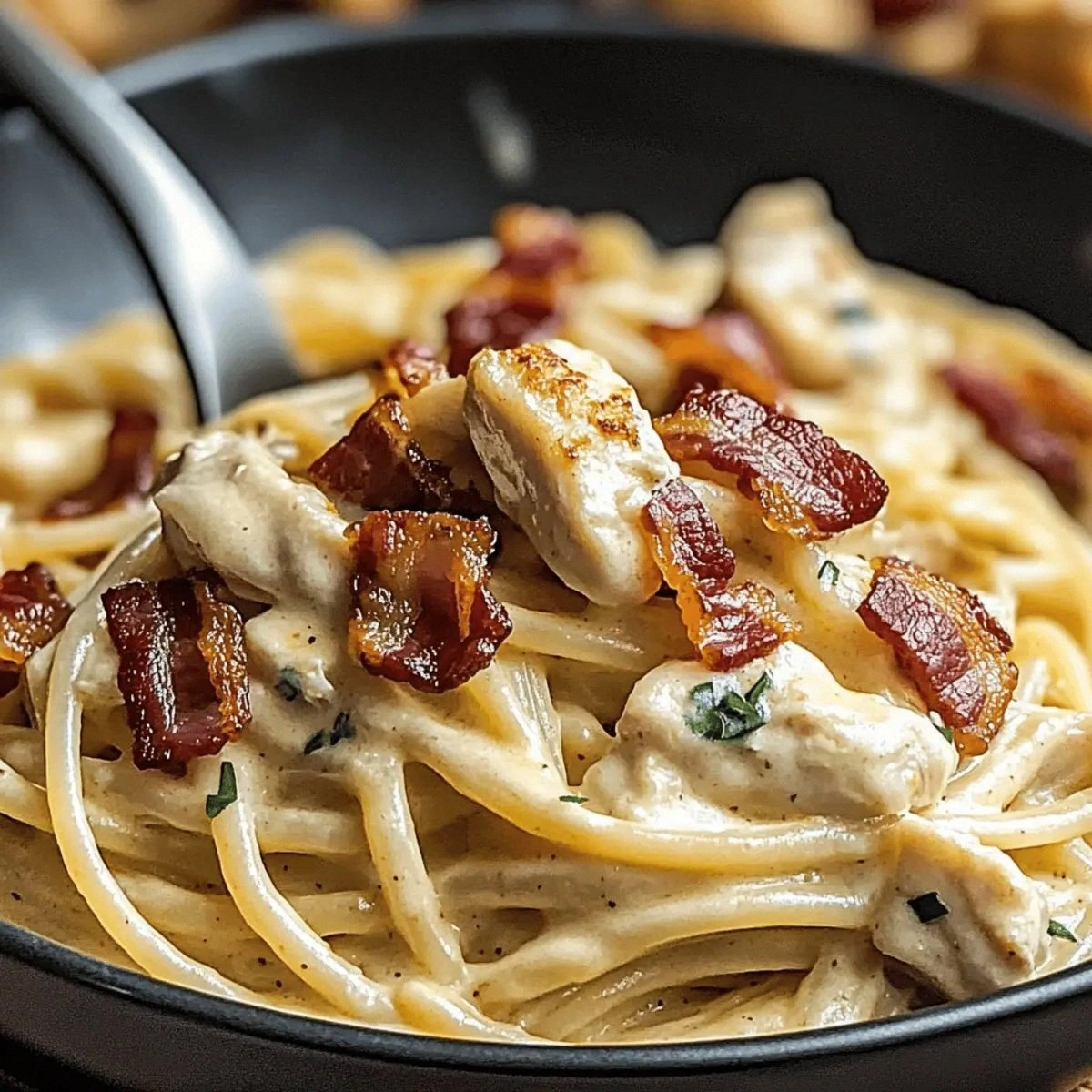
The Method — Step by Step
- Start by bringing a large pot of generously salted water to a rolling boil. I'm talking ocean-level salty here—this is your only chance to season the pasta itself. While you're waiting, cut your bacon into bite-sized pieces and cube your chicken into ¾-inch pieces. This size ensures they cook through without drying out, and they're substantial enough to stand up to stirring later. The water should be at a fierce boil before you even think about adding pasta—those bubbles should look angry and determined.
- In a large, cold skillet, add your bacon pieces and turn the heat to medium. Starting cold lets the fat render slowly, creating the most perfectly crispy bacon without burning. Don't you dare crank up the heat here—patience is your friend. As the bacon cooks, you'll hear it go from a gentle sizzle to a happy crackle. Stir occasionally, letting the pieces brown evenly. This takes about 8-10 minutes, but don't watch the clock—watch the bacon. When it's golden and crisp, remove it with a slotted spoon to a paper towel-lined plate.
- Now for the fun part: add your chicken pieces to the hot bacon fat. Don't overcrowd the pan—if it looks cramped, work in batches. The chicken should sizzle immediately when it hits the pan. Let it cook undisturbed for 3-4 minutes until you see the edges turning opaque and golden. This is where the flavor magic happens. Flip each piece and cook another 2-3 minutes until cooked through. Remove the chicken to join the bacon on its paper towel vacation.
- By now your pasta water should be ready. Add your spaghetti or fettuccine and cook for 2 minutes less than package directions for al dente. Reserve 2 cups of pasta water before draining—you'll need this liquid gold later. Don't rinse the pasta! That starch is crucial for helping the sauce cling. The pasta should feel slightly firm when you bite it—it'll finish cooking in the sauce.
- While the pasta cooks, add minced garlic to the hot pan and cook for just 30 seconds. You'll smell it immediately—that warm, inviting aroma that makes everything feel like home. Don't let it brown! Browned garlic turns bitter and will ruin your sauce. Think of it as a quick perfume rather than a cooking ingredient.
- Reduce the heat to low and pour in the heavy cream. Use a wooden spoon to scrape up all those beautiful browned bits from the bottom of the pan—that's pure flavor concentrate. Let the cream warm through for about a minute, stirring constantly. You want it hot but not boiling. Boiling cream can separate and turn grainy, which is the opposite of what we're going for here.
- In a small bowl, whisk together the egg and half the Parmesan cheese. This is your sauce insurance policy. The cheese helps stabilize the mixture and prevents scrambling. Slowly pour in about ¼ cup of the warm cream while whisking constantly—this tempers the egg so it won't turn into scrambled eggs when it hits the hot pan.
- Add the tempered egg mixture back into the pan with the cream, whisking continuously. Keep the heat on low and watch as the sauce thickens into this gorgeous, silky coating. It should coat the back of a spoon but still be pourable. If it gets too thick, thin it with a splash of reserved pasta water. Return the chicken and half the bacon to the pan.
- Add the drained pasta to the pan and toss everything together using tongs. The pasta should be glossy and well-coated. If it looks dry, add pasta water a tablespoon at a time until you get that perfect consistency. Add the remaining Parmesan cheese and black pepper, tossing to combine. The sauce should cling to every strand without pooling at the bottom.
- Remove from heat and add the fresh parsley, tossing to distribute. The residual heat will wilt it just enough to release its bright flavor. Serve immediately in warmed bowls, topping with the reserved crispy bacon. That contrast between hot pasta and the cool, crisp bacon bits? That's the moment of truth right there.
That's it—you did it. But hold on, I've got a few more tricks that'll take this to another level...
Insider Tricks for Flawless Results
The Temperature Rule Nobody Follows
Here's the thing about carbonara: temperature is everything, but not in the way you think. Your cream should be warm but never hot when you add the egg mixture. Think baby-bottle warm—comfortable on your wrist but not steaming. If you've ever ended up with scrambled egg pasta, you know exactly why this matters. I keep a kitchen thermometer handy and aim for 160°F. Anything hotter and you're playing Russian roulette with your sauce.
The same goes for your pasta. It should be hot when it hits the sauce, but not boiling hot. Let it drain for about 30 seconds so it's not carrying tons of water, but don't let it cool completely. That residual heat helps the sauce come together without overcooking the eggs. It's a delicate balance, but once you feel it once, you'll never forget.
Why Your Nose Knows Best
Most recipes tell you to cook by time, but I cook by smell. When the bacon hits that perfect crispy point, your kitchen will smell like a campfire that's just started up—smoky and inviting but not burnt. The garlic is ready when you can smell it from across the kitchen, about 30 seconds. It's a sweet, mellow aroma rather than sharp and aggressive. Trust your nose—it's been evolving for thousands of years to detect exactly these kinds of changes.
The same principle applies to knowing when your sauce is ready. It should smell rich and creamy, like the best mac and cheese you've ever had, but with this underlying brightness from the cheese. If it starts to smell eggy or sulfuric, you've gone too far. Pull it off the heat immediately and whisk in some cold cream to stop the cooking.
The 5-Minute Rest That Changes Everything
Here's a confession: I used to serve carbonara immediately, straight from the pan to the plate. It was good, but it wasn't great. Then I discovered the power of the 5-minute rest. After you finish cooking, let the pan sit off heat for exactly 5 minutes. During this time, the sauce thickens slightly, the flavors meld together, and the temperature drops to that perfect eating warmth.
This rest also allows the pasta to absorb just enough sauce to become glossy and well-coated without being dry. It's like the difference between a good photograph and a great one—those extra few minutes of patience that separate the amateurs from the pros. Cover the pan with a lid during the rest to keep everything warm, but don't go longer than 5 minutes or it'll start to tighten up.
Creative Twists and Variations
This recipe is a playground. Here are some of my favorite ways to switch things up:
Spring Garden Carbonara
Add a cup of fresh peas and some blanched asparagus tips when you return the chicken to the pan. The sweetness of the vegetables plays beautifully against the rich sauce, and the colors make it look like spring on a plate. I also swap the parsley for fresh chives and tarragon—it's like eating a garden, but in the most indulgent way possible.
Spicy Diablo Carbonara
Add a teaspoon of red pepper flakes when you cook the garlic, and finish with a drizzle of chili oil. The heat builds slowly, warming your whole mouth without overwhelming the creamy sauce. I also like to use pancetta instead of bacon for a more sophisticated heat. If you've ever wished carbonara had a little more kick, this version will make you very happy.
Mushroom Lover's Dream
Sauté a mix of cremini and shiitake mushrooms in the bacon fat before adding the garlic. They add this earthy depth that makes the whole dish taste more complex than it has any right to be. The mushrooms release their liquid and concentrate down into these meaty little umami bombs. Even mushroom skeptics find themselves converted.
Seafood Celebration Carbonara
Replace the chicken with large shrimp—sear them quickly in the bacon fat until they're just pink and curled. The sweetness of the shrimp against the smoky bacon creates this surf-and-turf situation that's absolutely magical. I also like to add a splash of white wine to the cream for extra brightness. It's like taking a trip to the coast without leaving your kitchen.
Vegetarian (But Still Indulgent)
Skip the chicken and bacon, and instead use smoked mushrooms and crispy shallots. The mushrooms get cooked in butter with smoked paprika until they're meaty and rich. The shallots get fried until they're like savory candy. You won't miss the meat at all—the smoke and crunch are still there, just in vegetable form.
Breakfast Carbonara
Add a softly poached egg on top of each serving, and swap the bacon for breakfast sausage. Break the egg and let the yolk mix with the creamy sauce—it's like the best breakfast sandwich you've ever had, but in pasta form. I also like to add a little maple syrup to the cream for that sweet-savory breakfast magic. Perfect for those mornings when you need serious comfort food.
Storing and Bringing It Back to Life
Fridge Storage
Here's the beautiful thing about this carbonara: it actually keeps well, unlike traditional versions that turn into a greasy mess. Store leftovers in an airtight container in the refrigerator for up to 4 days. The key is to let it cool completely before refrigerating—hot pasta in a sealed container creates condensation that makes everything soggy. I divide it into individual portions so I can grab just what I need.
Press plastic wrap directly against the surface before sealing the container. This prevents that weird skin from forming and keeps the sauce creamy. When you're ready to reheat, let it sit at room temperature for 15 minutes first. Cold carbonara straight from the fridge will never reheat properly.
Freezer Friendly
Most people will tell you not to freeze creamy pasta, but this version defies the odds. Freeze individual portions in freezer-safe containers for up to 2 months. The cream acts as a stabilizer, preventing that grainy texture you usually get with frozen dairy. Thaw overnight in the refrigerator—never try to speed this up in the microwave or you'll end up with mush.
I like to freeze the crispy bacon separately in a zip-top bag. It defrosts in minutes and stays crispy, so you can sprinkle it on top of reheated carbonara for that fresh-cooked texture. It's like having a restaurant-quality meal ready whenever you need comfort food fast.
Best Reheating Method
The microwave works in a pinch, but the stovetop method gives you back that just-cooked texture. Add a splash of water or cream to a pan, then add your cold carbonara. Heat gently over medium-low, stirring constantly, until it's heated through and creamy again. Add a tiny splash of water before reheating—it steams back to perfection.
If you're using the microwave, do it in 30-second bursts, stirring between each burst. Add a teaspoon of water and cover with a damp paper towel. This creates steam that helps re-emulsify the sauce. Stop as soon as it's hot—overheating is what turns creamy dreams into greasy nightmares.