Love this? Pin it for later!
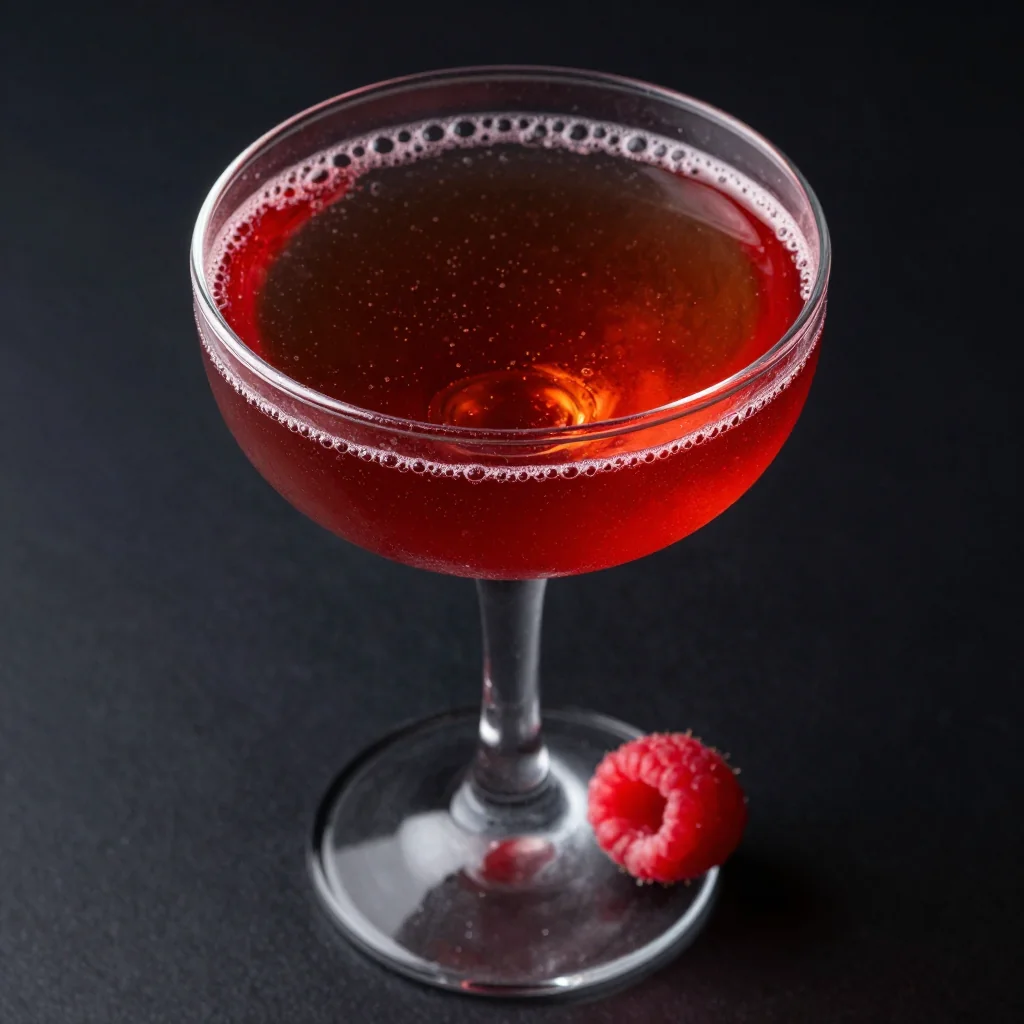
There’s a moment—just after the midnight cheers fade, when the confetti has settled and the last firework crackles overhead—when the world feels impossibly bright and full of possibility. That’s the moment I first tasted a Kir Royale. I was twenty-three, standing on a Parisian balcony overlooking the Seine, clutching a borrowed flute of champagne that had been kissed with a whisper of crème de cassis. One sip and I understood why the French call this ruby-tinted cocktail a “bise de l’ange”—an angel’s kiss. Ever since, I’ve poured it at every New Year’s Day brunch, bridal shower, and milestone birthday. It’s effortless elegance in a glass: brisk bubbles, sun-warmed black-currant perfume, and the promise that anything can begin again. Below you’ll find my tried-and-true formula, plus every bartender secret I’ve collected along the way so your first toast of the year tastes like pure optimism.
Why This Recipe Works
- Precision pour: A jigger-measured ⅓ oz of crème de cassis keeps the drink jewel-toned without cloying sweetness.
- Glassware ritual: Chilling the flute ahead guarantees a slow, graceful bubble rise and a frosty stem your guests can’t resist photographing.
- Fruit-forward but dry: Brut champagne’s acidity balances the jammy black-currant liqueur, so each sip finishes clean.
- Zero waste: One 750 ml bottle of cassis will dress 45–50 cocktails—perfect for party math.
- Make-ahead friendly: Pre-measure cassis into mini bottles; just pop corks at go-time.
- Scalable garnish: Frozen black-currant skewers double as stirring wands and keep the drink cold without dilution.
Ingredients You'll Need
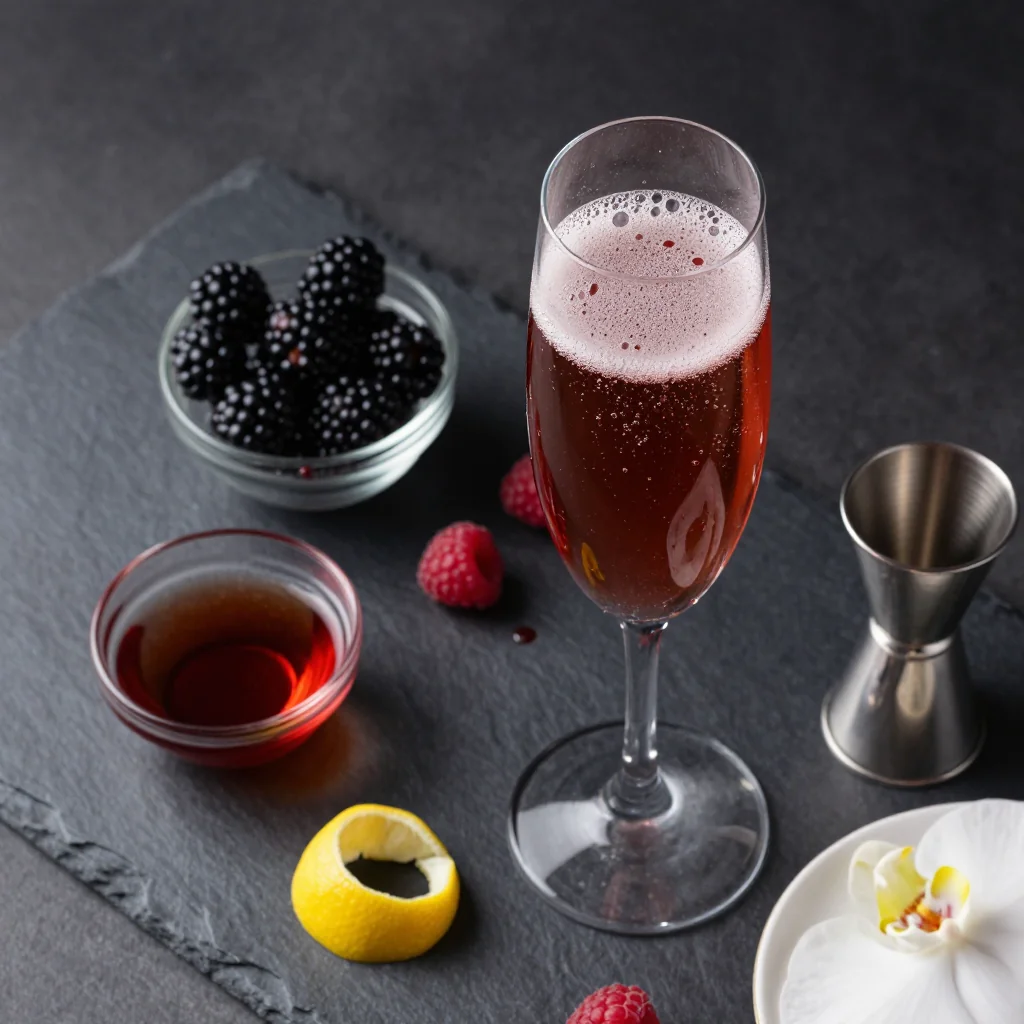
Great cocktails start with meticulous shopping. Here’s what to look for, plus the best substitutes if your local store is post-holiday bare.
Brut Champagne or Crémant
True Champagne from the French region is ideal, but an affordable Crémant de Loire or Crémant de Bourgogne delivers similar brioche notes for half the price. Look for the word “Brut” to ensure dryness; Extra-Dry will taste noticeably sweeter once the cassis is added. Buy the 375 ml half-bottles if you’re mixing only a round or two; the bubble integrity stays lively because you’ll finish the bottle quickly.
Crème de Cassis
Not all black-currant liqueurs are created equal. Seek out brands that list real fruit maceration on the label—Lejay, Giffard, or Massenez. A deep garnet color and syrupy legs that slowly slide down the glass indicate higher fruit content. Avoid neon-purple “cassis syrup” sold for snow cones; it’s cloying and artificial. If you’re in a pinch, Chambord (black-raspberry) works, but reduce the pour to ¼ oz and add a tiny squeeze of lemon to sharpen the profile.
Fresh Lemon (optional but transformative)
A quick 2-inch peel expressed over the glass releases lemon oils that ride the bubbles upward, amplifying the cassis aroma. Use organic fruit to avoid wax residue.
Frozen Black Currants or Raspberries
Fresh currants are nearly impossible to source in North America outside of July, so frozen gems are your week-long brunch heroes. They act as ice cubes that won’t water down the drink.
Raw Sugar Cube & Bitters (for the Retro Royale variation)
Placing a sugar cube at the bottom of the flute then soaking it with Angostura adds a cascading glitter effect once the champagne hits—pure dinner-party theater.
Equipment
A 6-oz tulip-shaped flute maximizes bubble survival, but a 7-oz white-wine glass works if you need to clink outdoors (wider base = harder to tip over on a picnic blanket). Polish glasses with a microfiber cloth; even microscopic towel fibers can create nucleation sites that flatten champagne faster.
How to Make New Year's Day Kir Royale with Crème de Cassis
Chill Everything First
Place your champagne, crème de cassis, and glasses in the freezer for 20 minutes—not longer or the cassis may become viscous. Alternatively, fill each flute with ice water while you gather ingredients; dump just before pouring.
Measure the Cassis
Using a Japanese jigger, pour exactly ⅓ oz (10 ml) into the bottom of each flute. Tilt the glass slightly so the liqueur slides down the side; this prevents sticky residue on the rim and keeps the color gradient dramatic.
Pop & Pour Champagne
Remove the foil and wire cage in one swift twist to avoid a premature cork pop. Hold the bottle at a 45° angle and let the bubbles do the work; you want a gentle hiss, not a Formula-1 spray. Fill to ¾ full, leaving room for garnish.
Express Lemon Peel
Slice a thin coin of peel, avoiding the bitter white pith. Pinch it shiny-side-down over the glass to spritz lemon oils, then swipe the rim and drop it in or discard for a clearer visual.
Skewer Frozen Berries
Thread two frozen black currants (or raspberries) on a 4-inch cocktail pick. Balance across the flute or plunge in; the temperature shock keeps the champagne effervescent for up to 15 minutes longer than room-temperature fruit.
Serve Immediately with a Toast
Hand guests their glass while the mousse (foam collar) is still two fingers thick. My go-to New Year’s toast: “May your troubles be less, and your bubbles be more.”
Expert Tips
Temperature Is Bubble Insurance
Champagne holds 2.5× more CO₂ at 39 °F than at room temp. Store bottles horizontally on the lowest fridge shelf where vibration and temperature fluctuate least.
Prevent Over-Foaming
Rinse flutes with cold, not hot, water before chilling. Residual heat creates nucleation sites that unleash an uncontrollable mousse.
Revive Leftover Bubbly
Clamp on a stainless-steel spoon handle and cover with plastic wrap; the metal conducts cold and creates an arctic plug that slows CO₂ escape. Drink within 24 h.
Mocktail Magic
Swap champagne for alcohol-free sparkling Brut (try Pierre Chavin or Thomson & Scott Noughty) and use ½ oz black-currant shrub instead of cassis.
Color Control
For an ombré sunset, pour cassis over the back of a barspoon after the champagne; for a homogenous rose, pour cassis first then swirl once.
Party Math
One standard 750 ml champagne yields 6 cocktails; a magnum (1.5 L) yields 12. Pre-write the ratio on painter’s tape stuck to the ice bucket for stress-free refills.
Variations to Try
- Kir Impérial – Sub crème de cassis with a splash of raspberry liqueur and add a single rose petal for Valentine’s flair.
- Cidre Royale – Use dry Norman cider instead of champagne and garnish with a paper-thin apple slice.
- Herb Garden Twist – Muddle one basil leaf in the cassis before adding bubbles; strain if you dislike flecks.
- Saffron Kir – Steep 3 saffron threads in the cassis overnight for a golden halo and honeyed nose.
- Smoky Royale – Rinse the flute with mezcal, dump, then proceed; the faint smoke marries beautifully with black-currant jam notes.
Storage Tips
Because Kir Royales are built in the glass, storage is mostly about preserving your components rather than the finished drink. Crème de cassis is shelf-stable for 2+ years once opened, but keep it in a dark cabinet away from heat; color fade indicates oxidation. Re-corked champagne will keep 24–36 h in the fridge with a clamp, though bubbles noticeably soften after 12 h. For longer holding, freeze leftover champagne in ice-cube trays and blitz cubes into granitas for a grown-up dessert. Frozen berry garnishes can be stored in a zip-top bag up to 6 months; spread in a single layer on a sheet pan before freezing to prevent clumping.
Frequently Asked Questions
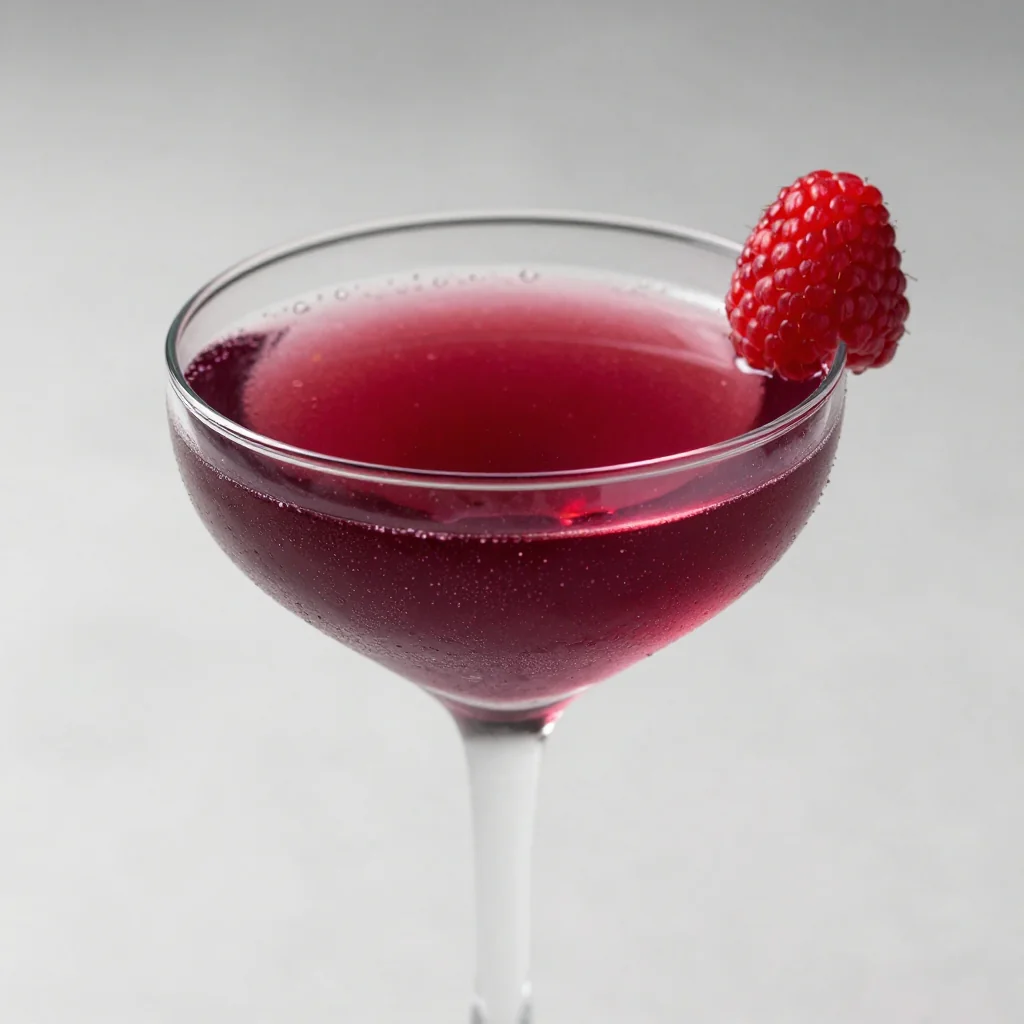
New Year's Day Kir Royale with Crème de Cassis
Ingredients
Instructions
- Chill the glass: Place a 6-oz champagne flute in the freezer for 20 min or fill with ice water.
- Measure cassis: Discard any ice water, then add crème de cassis to the cold flute.
- Pour champagne: Tilt the flute 45° and slowly top with brut champagne, letting the liquid slide down the side for minimal foam.
- Express lemon: Pinch lemon peel over the glass to release oils, then drop in or discard.
- Garnish: Skewer frozen berries on a pick, rest across the rim, and serve instantly.
Recipe Notes
Multiply cassis by the number of servings, but only add champagne right before pouring to keep bubbles lively. For a sweeter palate, bump cassis to ½ oz; for drier, scale back to ¼ oz.