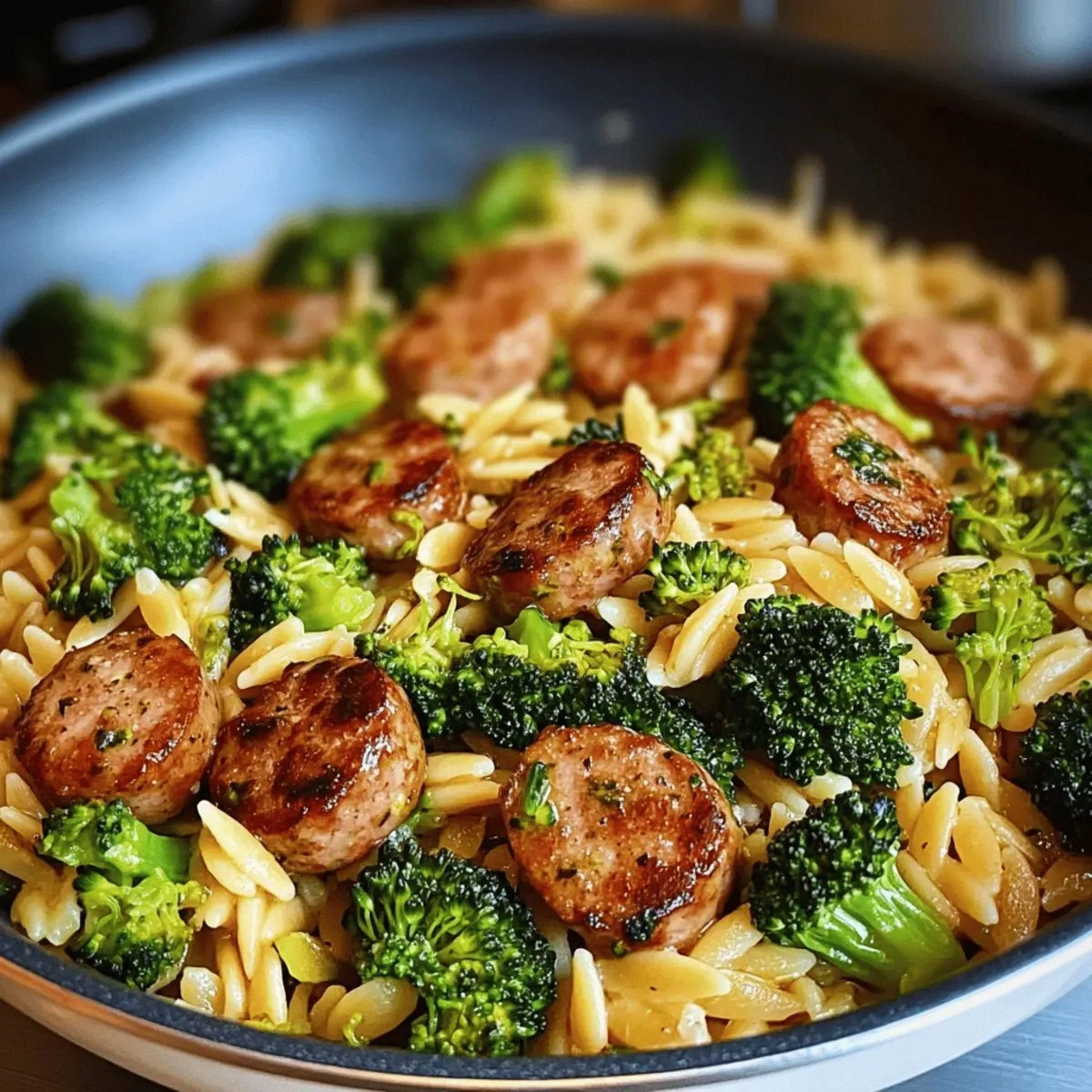
Picture this: I’m standing in my kitchen at midnight, a half‑finished pot of bland orzo staring back at me like a culinary accusation, and my roommate daring me to make something that won’t taste like “just another weeknight dinner.” I accepted the challenge, because when you’ve spent a decade perfecting the art of one‑pot meals, you learn quickly that the difference between “meh” and “mind‑blowing” is often just a handful of bold moves. The moment the chicken sausage hit the sizzling pan, the kitchen filled with a smoky perfume that made the timer on the microwave feel ashamed, and I knew I was on to something spectacular. I tossed in garlic that crackled like tiny fireworks, followed by broccoli that turned a vivid emerald as it softened, while the orzo soaked up every bit of that savory broth, turning buttery and tender in a way that would make even the most skeptical palate swoon. I’ll be honest — I ate half the batch before anyone else got a chance to try it, and I’m still daring you to taste this and not go back for seconds.
The first bite is a revelation: the sausage’s juicy snap, the broccoli’s crisp‑tender bite, and the orzo’s creamy, almost risotto‑like texture all wrapped together in a cheesy embrace that coats each morsel like velvet. Most recipes get this completely wrong, either drowning the dish in a soupy mess or leaving the pasta dry and stubborn. I discovered that the secret lies in timing the broth addition just right and letting the cheese finish the cooking, a technique that will become your new kitchen superpower. Imagine the steam swirling around you as the cheese melts, the aroma of toasted garlic and roasted sausage mingling with the fresh green scent of broccoli—this is hands down the best version you’ll ever make at home.
What truly sets this one‑pot wonder apart is the simplicity of the method paired with an explosion of flavor that feels gourmet without the fuss. No extra pans, no complicated steps, just a single pot that does the heavy lifting while you relax and watch the transformation unfold. I dare you to try any other version and compare; the difference is like night and day, or better yet, like a quiet acoustic ballad versus a full‑blown rock anthem. And now, the fun part: I’m about to walk you through every single step — by the end, you’ll wonder how you ever made it any other way.
What Makes This Version Stand Out
- Flavor Explosion: The combination of smoky chicken sausage with a buttery parmesan finish creates a depth that’s impossible to achieve with plain ground meat.
- Texture Harmony: Orzo turns tender yet slightly al dente, while broccoli stays crisp‑tender, and the sausage retains a satisfying snap.
- Simplicity: One pot, minimal cleanup, and a total cook time under 45 minutes make this perfect for busy weeknights.
- Ingredient Quality: Using high‑quality links chicken sausage ensures a richer, meatier flavor than generic links.
- Crowd‑Pleaser: Even picky eaters love the cheesy coating and the familiar comfort of sausage‑and‑broccoli.
- Make‑Ahead Potential: This dish reheats beautifully, and the flavors meld even more after a night in the fridge.
- Cooking Method Magic: The one‑pot technique locks in moisture, preventing the orzo from turning mushy.
- Versatility: Swap in different veggies or proteins, and you have a whole new family of meals.
Inside the Ingredient List
The Flavor Base
Four links of chicken sausage are the heart of this dish, delivering a smoky, slightly spiced backbone that elevates every bite. Choose sausage that’s lightly seasoned rather than heavily smoked, because you want the flavor to complement, not overpower, the delicate broccoli and orzo. If you skip the sausage, you’ll lose that satisfying snap and the dish will feel flat, like a song missing its bass line. A great tip is to pat the sausage dry before browning; excess moisture will steam rather than sear, diluting the flavor. Pro tip: Look for sausage made with a blend of pork and chicken for the perfect balance of juiciness and lean protein.
The Aroma Crew
Three cloves of garlic, minced just before cooking, release a pungent perfume that instantly awakens the senses—think of it as the opening riff of a rock anthem. Garlic’s natural sugars caramelize quickly, adding a subtle sweetness that balances the salty sausage. If you’re allergic or simply don’t love garlic, try shallots; they’ll give a milder, onion‑like depth without the sharp bite. Skipping garlic would be like omitting the lead guitar solo; the dish would still be good, but missing that unforgettable moment.
The Texture Crew
One cup of orzo pasta is the perfect size to soak up the broth while maintaining a tender bite; it’s the culinary equivalent of a perfectly timed drum fill. The key is to toast the orzo briefly before adding liquid, creating a nutty flavor that underpins the whole dish. If you substitute rice or quinoa, you’ll change the texture dramatically—still tasty, but not the same comforting mouthfeel. Choose a high‑quality, bronze‑cut orzo for a slightly chewier bite that holds up better during reheating.
The Green Boost
Two cups of broccoli florets bring a burst of bright color and a crisp‑tender snap that contrasts beautifully with the soft orzo. Fresh broccoli is best; frozen can release excess water, making the dish soupy. If you can’t find fresh, steam the frozen broccoli first to remove moisture before adding it to the pot. Skipping the broccoli would strip the dish of its vital green freshness, making it feel heavier and less balanced.
The Final Flourish
Half a cup of Parmesan cheese is the finishing touch, melting into the broth to create a silky, glossy coating that clings to each grain of orzo like a lover’s embrace. Use a good‑quality, aged Parmesan for maximum umami; pre‑grated cheese often contains anti‑caking agents that prevent proper melting. If you’re dairy‑free, try nutritional yeast for a cheesy note, though the texture will differ. Forgetting the cheese is like ending a movie before the climax—leaving the audience unsatisfied.
Everything’s prepped? Good. Let’s get into the real action and see how these ingredients dance together in a single pot.
The Method — Step by Step
Heat a large, heavy‑bottomed pot over medium‑high heat and add a drizzle of olive oil. Once the oil shimmers, lay the four links of chicken sausage in the pan, letting them sizzle until they develop a deep golden crust—about 3‑4 minutes per side. This searing step is crucial; it creates those caramelized edges that shatter like thin ice when you bite into them. As the sausage browns, you’ll hear a satisfying pop that signals flavor building. Watch Out: If the heat is too high, the sausage will burn before the interior cooks through, so keep the flame moderate.
Remove the sausage and set it aside, then add the minced garlic to the same pot. Stir constantly for 30 seconds until the garlic turns fragrant and a light golden hue appears—this is the moment of pure aromatics. If you let the garlic sit too long, it will turn bitter, so stay close and keep the spoon moving. That sizzle when it hits the pan? Absolute perfection.
Kitchen Hack: Add a pinch of red pepper flakes with the garlic for a subtle heat boost without overwhelming the dish.Next, sprinkle the one cup of orzo into the pot, stirring to coat each grain with the garlic‑oil mixture. Toast the orzo for 2‑3 minutes, allowing it to turn a light amber color; this step adds a nutty foundation that prevents the pasta from becoming mushy later. You’ll notice the scent shifting to a toasted, almost popcorn‑like aroma—trust that cue, it means the orzo is ready. If you skip this toasting, the orzo will absorb liquid too quickly and end up soggy.
Now, deglaze the pot with half a cup of low‑sodium chicken broth, scraping up any browned bits stuck to the bottom. Those browned bits are flavor gold; they’ll dissolve into the broth, creating a richer base. Let the broth simmer for a minute, allowing the orzo to soak up the liquid and start softening. This is the moment of truth—if the liquid evaporates too fast, add a splash more broth; if it lingers, the orzo will stay undercooked.
Return the seared sausage to the pot, slicing each link into bite‑size rounds. Add the two cups of broccoli florets, arranging them around the sausage so they steam evenly. Sprinkle in a generous pinch of salt and freshly cracked black pepper, tasting as you go—remember, the sausage already brings saltiness, so you’re just fine‑tuning.
Cover the pot with a tight‑fitting lid and reduce the heat to low, letting everything simmer for 12‑15 minutes. During this time, the orzo will finish cooking, the broccoli will become tender yet still vibrant, and the sausage will re‑absorb the flavors. Check the pot after ten minutes; you should see a gentle bubble rising at the edges, and the scent should be a harmonious blend of cheese, garlic, and roasted meat.
When the orzo is al dente and the broccoli is perfectly tender, remove the lid and stir in the half‑cup of grated Parmesan cheese. Keep the pot on low heat and toss until the cheese melts into a glossy sauce that clings to every ingredient. The cheese should create a silky coating, not a clumpy mess—if it looks grainy, add a splash of broth and keep stirring.
Give the dish a final taste, adjusting salt and pepper if needed, then turn off the heat. Let the pot sit, covered, for two minutes; this rest allows the flavors to meld and the sauce to thicken slightly. Power transition: Okay, ready for the game‑changer? Serve the pot directly at the table, letting each guest scoop generous portions of sausage, broccoli, and orzo, all drenched in that buttery Parmesan glaze. That moment when you see the steam rise and hear the satisfied sighs? Pure magic.
That's it — you did it. But hold on, I've got a few more tricks that'll take this to another level, ensuring every bite is as unforgettable as the first.
Insider Tricks for Flawless Results
The Temperature Rule Nobody Follows
Never start with a cold pan; pre‑heat your pot for at least a minute before adding oil. This small step creates an instant sear on the sausage, locking in juices. I once tried a “cold‑start” method and ended up with soggy links that released water, turning the whole dish into a broth. The rule of thumb is: heat the pan, then add the fat, then the meat. Trust the heat, and the rest will follow.
Why Your Nose Knows Best
When the garlic turns fragrant, that’s your cue to move on—no timer needed. Your nose can detect the exact moment the garlic reaches that golden perfume, which is far more reliable than a stopwatch. I’ve watched friends over‑cook garlic until it turns black, ruining the flavor; they missed the subtle nose signal. So, keep your nostrils open and trust them as your personal cooking assistant.
The 5‑Minute Rest That Changes Everything
After you turn off the heat, let the pot sit, covered, for exactly five minutes. This rest lets the starches in the orzo fully absorb the remaining liquid, resulting in a creamier texture. Skipping this step is like cutting a song before the final chord—something essential is missing. I once served the dish straight off the stove and got feedback that it was “a bit dry”; a short rest solved that instantly.
Cheese Timing Mastery
Adding Parmesan at the very end prevents it from clumping and ensures a smooth, glossy sauce. If you stir it in too early, the cheese can seize and become grainy. I experimented by adding cheese halfway through and ended up with a gritty texture that felt like sand in a mouthful. The magic happens when the heat is low and the cheese melts gently, coating each bite.
Broccoli Steam Boost
Place the broccoli florets on top of the orzo, not mixed in, during the final simmer. This positioning allows the broccoli to steam rather than boil, preserving its bright color and snap. If you submerge the broccoli, it releases water that dilutes the sauce. A quick steam gives you that perfect contrast between tender orzo and crisp broccoli.
Creative Twists and Variations
This recipe is a playground. Here are some of my favorite ways to switch things up:
Spicy Sriracha Swirl
Stir in a tablespoon of sriracha with the broth for a subtle heat that cuts through the richness. The peppery kick pairs beautifully with the sausage, and the bright red swirl looks stunning on the plate. Perfect for those who love a little fire without overwhelming the palate.
Cheesy Four‑Cheese Fusion
Replace half of the Parmesan with shredded mozzarella and a sprinkle of sharp cheddar. The mozzarella adds stretchiness, while cheddar introduces a deeper, tangy note. This version feels like a comfort‑food casserole, ideal for chilly evenings.
Italian Herb Infusion
Add a teaspoon of dried oregano and a handful of fresh basil at the end of cooking. The herbs bring a Mediterranean flair, turning the dish into a rustic Italian dinner. Basil’s aromatic sweetness balances the salty sausage perfectly.
Veggie‑Packed Power Bowl
Swap the broccoli for a mix of roasted carrots, zucchini, and red peppers. The varied colors make the plate pop, and each vegetable adds its own texture—sweet carrots, tender zucchini, and slightly charred peppers. Great for a family that loves variety.
Protein‑Swap Surprise
Replace chicken sausage with sliced turkey breast or even firm tofu cubes for a lighter version. The cooking method stays the same; just adjust the searing time for the new protein. This flexibility makes the dish suitable for different dietary preferences.
Gluten‑Free Orzo Alternative
Use rice pasta or quinoa in place of traditional orzo. Both absorb flavors well, but quinoa adds a nutty crunch, while rice pasta keeps the texture familiar. Ensure the cooking time matches the alternative you choose to avoid over‑cooking.
Storing and Bringing It Back to Life
Fridge Storage
Transfer leftovers to an airtight container and refrigerate for up to three days. The flavors actually deepen after a night, making the second serving even richer. When reheating, add a splash of water or broth to restore moisture, then microwave or warm on the stovetop over low heat.
Freezer Friendly
This dish freezes beautifully. Portion into freezer‑safe bags, squeeze out excess air, and store for up to two months. To reheat, thaw overnight in the fridge, then warm in a skillet with a bit of broth, stirring until the sauce re‑emulsifies.
Best Reheating Method
The secret to perfect reheating is gentle steam. Place the leftovers in a saucepan, add a tablespoon of water per cup of leftovers, cover, and heat over low for five minutes. The steam revives the orzo’s creaminess without turning it gummy, and the cheese melts back into a silky coat.