You know that moment when the kitchen feels like a war zone, pots clanging, a sauce splattering, and you’re left staring at a pile of soggy pasta that looks more like a science experiment gone wrong? That was me last week, clutching a pot of overcooked spaghetti that had turned into a chewy, mushy mess. I stared at it for a full minute, thinking, “Why do I even bother with pasta salads when I can just toss a handful of veggies into a bowl and call it a day?” Then, out of the corner of my eye, I spotted a handful of ripe cherry tomatoes, a block of fresh mozzarella, and a handful of basil leaves on the counter. I laughed, because the idea of turning that disaster into something that could actually make my guests beg for seconds felt like a culinary miracle.
The kitchen smelled suddenly of sweet tomatoes and basil, the air thick with the faint, almost intoxicating scent of balsamic vinegar. The sound of a boiling pot filled the room, and as I watched the pasta bubble, the anticipation built like a drumroll before a concert. I could almost taste the bright, acidic burst of the tomatoes against the creamy mozzarella, the peppery bite of basil, and the glossy, caramelized glaze that would coat everything like velvet. The texture was a playful contrast: the pasta’s al dente firmness, the juicy pop of the tomatoes, and the soft, slightly gooey mozzarella that would melt just enough to bind the flavors together.
What makes this version of Caprese pasta salad stand out is that it takes the classic ingredients and elevates them with a technique that most recipes skip: a homemade balsamic reduction that thickens into a glossy glaze, and a mindful tossing method that ensures every bite is balanced. I dare you to taste this and not go back for seconds because the sauce doesn’t just coat; it envelops each strand of pasta, making it feel like a luxurious, savory dessert. This is hands down the best version you'll ever make at home. I’ll be honest — I ate half the batch before anyone else got to try it. Most recipes get this completely wrong. Here’s what actually works. Picture yourself pulling this out of the pot, the whole kitchen smelling incredible, and your guests asking for the secret.
Okay, ready for the game-changer? Let me walk you through every single step — by the end, you'll wonder how you ever made it any other way.
What Makes This Version Stand Out
- Taste: The combination of sweet, acidic, and savory notes creates a flavor profile that feels both fresh and indulgent. The balsamic glaze adds a deep caramel sweetness that balances the bright tomato acidity and the creamy mozzarella.
- Texture: Each ingredient is carefully chosen to provide a contrasting feel — al dente pasta, juicy tomatoes, silky mozzarella, and crisp basil leaves that snap with a gentle crunch.
- Simplicity: No elaborate sauces or fancy garnishes. A few simple ingredients and a quick reduction make this dish a breeze to whip up.
- Uniqueness: The homemade balsamic reduction is the secret sauce that sets this recipe apart from the endless variations you’ll find online.
- Crowd Reaction: This salad is guaranteed to be a showstopper at parties. The colors alone scream “summer,” and the taste will have people lining up for seconds.
- Ingredient Quality: Using the freshest mozzarella, ripe tomatoes, and fragrant basil is key. The quality of these simple items elevates the whole dish.
- Cooking Method: The precise timing of the pasta boil and the reduction step ensures the dish is ready in under 30 minutes.
- Make-Ahead Potential: You can prepare the salad up to two days ahead. Just keep the dressing separate until you’re ready to serve.
Inside the Ingredient List
The Flavor Base
The 12 ounces of pasta form the foundation. Use a short shape like penne or fusilli for better texture and to hold the dressing. If you’re aiming for a lighter version, switch to whole‑grain pasta to add a nutty undertone. Skipping pasta would turn this into a simple Caprese salad, losing that satisfying bite that keeps people coming back.
The ½ cup of balsamic vinegar is the star that delivers depth. Balsamic vinegar’s natural sweetness and acidity balance the richness of the mozzarella and the freshness of the basil. If you can’t find high‑quality balsamic, a good aged red wine vinegar with a touch of honey can mimic the flavor.
The 1 tablespoon of honey or brown sugar is the sweetener that turns the vinegar into a glossy glaze. Honey gives a floral nuance, while brown sugar adds a caramel undertone. If you prefer a sharper finish, try a splash of maple syrup for a subtle maple‑balsamic twist.
The Texture Crew
The 1½ cups of cherry tomatoes provide a burst of juicy sweetness. Their skins are thin, so they burst easily when tossed with the dressing, releasing their juice. If you’re in a pinch, diced regular tomatoes can work, but they’ll need to be pre‑cooked to avoid excess moisture.
The 8 ounces of fresh mozzarella is the creamy center. Cut it into bite‑sized cubes so it melts slightly into the dressing, creating a luscious, velvety texture. If you can’t find mozzarella, a firm paneer or a mild provolone can offer a similar mouthfeel.
The ½ cup of fresh basil adds a peppery, aromatic lift. Tear the leaves to release essential oils. If basil is out of season, a handful of fresh parsley or a splash of dried basil can work, but the aroma will be noticeably different.
The 2 tablespoons of extra‑virgin olive oil acts as a binder and adds a subtle fruitiness. It also helps the dressing coat the pasta evenly. For a smoky twist, use a pepper‑infused olive oil.
Everything's prepped? Good. Let's get into the real action...
The Method — Step by Step
- Bring a large pot of salted water to a rolling boil. Add the 12 ounces of pasta and cook until just al dente, about 8 minutes. Drain and rinse under cold water to stop the cooking process. Toss the pasta with a splash of olive oil so it doesn’t stick together. This is the moment of truth, and it sets the foundation for the entire dish.
- While the pasta cooks, prepare the balsamic glaze. In a small saucepan, combine ½ cup balsamic vinegar with 1 tablespoon honey. Bring to a gentle simmer over medium heat, stirring constantly. Let it reduce until it’s thick enough to coat the back of a spoon, about 7–10 minutes. Watch the color shift from deep ruby to a glossy amber; that’s the sweet spot. The glaze should smell caramelized, not burnt.
- In a large mixing bowl, combine the drained pasta, 1½ cups cherry tomatoes, and 8 ounces mozzarella cubes. Add the freshly torn basil leaves. Gently toss to combine, ensuring the tomatoes are evenly distributed. At this point, the pasta should be warm enough to slightly soften the mozzarella, but not hot enough to melt it completely.
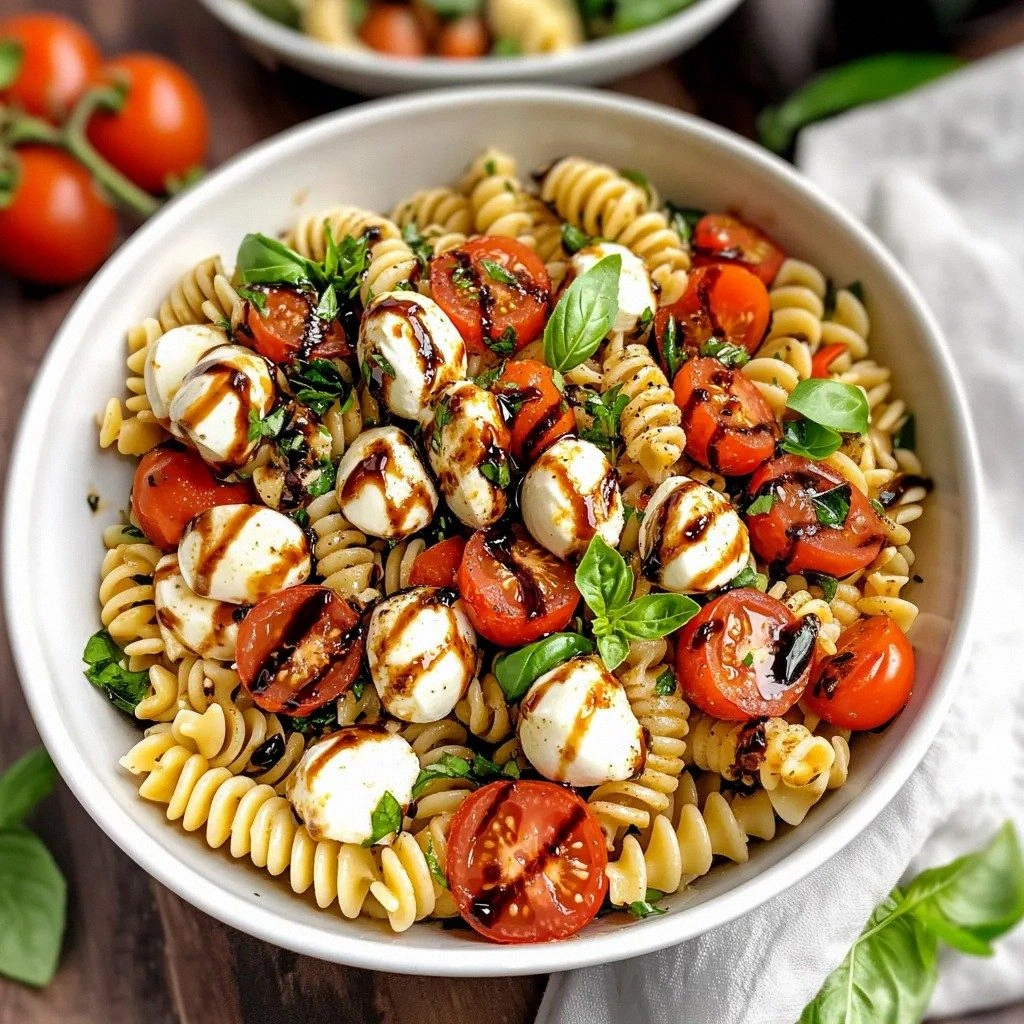
- Drizzle the prepared balsamic glaze over the pasta mixture, followed by 2 tablespoons of extra‑virgin olive oil. Season generously with salt and freshly cracked black pepper to taste. Toss everything together until each component is coated. The dressing should cling to the pasta, glistening like a fine satin.
- Let the salad sit for 5 minutes at room temperature. This allows the flavors to meld and the mozzarella to soften slightly, creating a more cohesive bite. If you’re serving immediately, skip this step and toss again to ensure even coating.
- If you’re preparing the salad ahead of time, cover the bowl tightly and refrigerate for up to 24 hours. The flavors deepen, and the pasta stays firm. When ready to serve, give it a gentle toss and add a splash of extra olive oil if it seems dry.
- Serve immediately or chill slightly before plating. Garnish with a few extra basil leaves or a drizzle of extra‑virgin olive oil if desired. The dish should look vibrant, with bright red tomatoes, creamy white mozzarella, and green basil specks. The aroma will be unmistakable, and the first bite will confirm that everything is spot on.
That’s it — you did it. But hold on, I've got a few more tricks that'll take this to another level. Keep reading to discover how to elevate the dish even further.
Insider Tricks for Flawless Results
The Temperature Rule Nobody Follows
Pasta is best tossed with the dressing while it's still warm. The heat from the pasta allows the mozzarella to soften just enough to release its creamy juices, which mingle with the glaze. If you wait until the pasta is cold, the mozzarella will stay firm and the dressing will cling less effectively. A quick stir in a hot skillet can also help coat the pasta evenly before you add the glaze.
Why Your Nose Knows Best
Before adding salt, give the dressing a quick sniff. If it smells too sharp, let the glaze simmer a bit longer. A properly reduced glaze has a faintly sweet, caramel aroma that signals it's ready. If it still smells raw, the vinegar’s acidity will overpower the tomatoes and mozzarella.
The 5-Minute Rest That Changes Everything
After tossing the salad, let it rest for exactly five minutes. This brief pause allows the flavors to marry and the dressing to settle. The pasta will absorb a little more glaze, and the mozzarella will release just enough moisture to bind everything together. Skipping this step will leave the salad feeling under‑seasoned.
The Secret Ingredient Swap
If you’re craving a smoky twist, sprinkle a pinch of smoked paprika into the dressing. The paprika adds depth and a subtle heat that complements the sweet glaze. For a peppery punch, finish the dish with a few drops of hot sauce or a sprinkle of crushed red pepper flakes.
The Quick Chill Trick
When you’re prepping ahead of time, place the salad in the refrigerator on a baking sheet lined with parchment. This prevents the pasta from sticking together and ensures a crisp texture when you serve it later. If you’re short on time, pop the bowl in the fridge for just 10 minutes to cool it quickly.
Creative Twists and Variations
This recipe is a playground. Here are some of my favorite ways to switch things up:
Mediterranean Medley
Swap the cherry tomatoes for sun‑dried tomatoes and add a handful of kalamata olives. The olives bring briny depth, while the sun‑dried tomatoes add chewy sweetness. Serve with a drizzle of lemon‑infused olive oil for an extra zing.
Protein Power
Add grilled chicken or shrimp to the mix for a protein boost. Slice the chicken thinly to maintain the bite and let the glaze coat the protein evenly. This version turns the salad into a satisfying main dish.
Pesto Perfection
Replace the basil with fresh parsley or cilantro, and fold in a tablespoon of pesto for a herby, nutty flavor. The pesto will give the dressing a creamy texture that complements the mozzarella’s softness. This variation is perfect for a quick lunch.
Vegan Variation
Use a plant‑based mozzarella alternative and omit the extra‑virgin olive oil. Add a splash of vegan balsamic vinegar for extra tang. The result is a cruelty‑free version that still delivers on flavor.
Dessert‑Inspired
Swap the mozzarella for a small cube of fresh ricotta and drizzle the glaze with a touch of maple syrup. The sweet ricotta balances the savory glaze, creating a dessert‑salad hybrid that’s both sweet and savory.
Winter Warmth
Add roasted butternut squash cubes and a sprinkle of sage. The warm, earthy flavors pair beautifully with the sweet glaze and fresh basil. This version is ideal for a cozy fall gathering.
Storing and Bringing It Back to Life
Fridge Storage
Store the salad in an airtight container in the refrigerator for up to 2 days. Keep the dressing separate until you’re ready to serve to prevent the pasta from becoming soggy. When ready, give it a gentle toss and add a splash of olive oil if it seems dry.
Freezer Friendly
Freezing is not recommended for this dish because the mozzarella will change texture. If you must, freeze the pasta and vegetables separately, then combine with a fresh glaze after thawing. This preserves the integrity of each component.
Best Reheating Method
If reheating is necessary, microwave the salad for 30 seconds, stir, then microwave for an additional 30 seconds. Add a tiny splash of water to create steam, which helps restore moisture without drying out the pasta. Finish with a drizzle of olive oil to re‑introduce that silky finish.