I still remember the morning I murdered my first smoothie bowl. There I stood, blender roaring like a jet engine, hurling frozen strawberries into the vortex with the confidence of a caffeinated squirrel. Thirty seconds later I had pink soup. Not the thick, spoon-standing glory I'd seen on Instagram, just sad strawberry milk with a few icebergs of granola bobbing around like lost ships. My roommate walked in, took one look, and asked if I was drinking Pepto-Bismol for breakfast. That stung. But here's the beautiful thing about spectacular failures: they force you to dig deeper, to understand why things work instead of just copying pretty pictures. Fast-forward through three months of daily experiments, a freezer that looked like a crime scene, and one memorable incident involving a smoke alarm and over-toasted coconut flakes, and I finally cracked the code. This strawberry smoothie bowl isn't just better than the internet's usual watery imposters; it's a complete reimagining of what a smoothie bowl can be—thick enough to hold toppings hostage, bright enough to make your morning feel like a beach vacation, and balanced so perfectly that you'll actually feel full until lunch. The secret isn't some exotic superfood powder that costs more than rent; it's a combination of temperature science, texture layering, and one sneaky canned fruit that changes everything. Picture this: you drag your spoon across the surface and it leaves a canyon that doesn't collapse. The granola stays perched on top like it owns the place, not sinking into pink quicksand. And when you take that first bite—oh, that first bite—the frozen berries hit your tongue like a snowstorm of summer, followed by the creamy richness of almond butter, the pop of fresh fruit, and the slow crunch of nuts and seeds that makes you close your eyes involuntarily. If you've ever thought smoothie bowls were just glorified fruit soup, prepare to have your mind blown and your spoon put to serious work.
What makes this version different starts with the base. Most recipes tell you to throw everything in a blender and hope for the best, which is why most smoothie bowls taste like watered-down disappointment. Instead, we're going to treat this like building a skyscraper: solid foundation first, then we add the fancy bits. The frozen strawberries don't just get tossed in randomly; they're partially thawed for exactly four minutes—set a timer, I'm serious—which softens the outer layer just enough to blend smoothly while keeping the core icy cold. This creates a texture that's closer to soft-serve ice cream than liquid smoothie, and it means your toppings won't perform a swan dive into the abyss. The canned pears are the undercover agents here; they bring natural sweetness, silk-smooth texture, and just enough acidity to make the strawberries taste like they've been kissed by sunshine. And here's where I lose some of you but gain the ones who really matter: we're using the pear juice from the can too, because throwing that away is like tossing liquid gold down the drain. It adds body and eliminates the need for extra sweeteners that make your blood sugar throw a tantrum an hour later.
But the real magic happens in the assembly, and this is where most people ruin everything. They dump everything in a pile and call it artistic. Amateur hour. We're creating layers of temperature and texture that keep every bite interesting. The granola goes on the bottom third, not the top, so it stays crunchy and creates a surprise crunch factor when you dig deep. The fresh fruit is sliced paper-thin so it curls and drapes like edible ribbons, not chunky icebergs that roll off your spoon. The nuts get a quick toast in a dry pan while the strawberries are thawing—multitasking, people—which releases their oils and intensifies their flavor tenfold. And the almond butter gets warmed slightly so it drizzles in lazy Jackson Pollock swirls instead of sitting in sad clumps. This isn't just breakfast; it's edible architecture that would make Frank Lloyd Wright weep with joy. The best part? Once you understand the principles, you can freestyle like a jazz musician on Sunday morning, creating variations that'll make your taste buds think they've died and gone to a farmers market in paradise.
Let me walk you through every single step—by the end, you'll wonder how you ever made it any other way.
What Makes This Version Stand Out
Texture Perfection: This isn't a drink you eat with a spoon. We're creating a frozen custard base so thick you could probably ice a cake with it if you were feeling particularly rebellious. The secret ratio of frozen fruit to liquid creates a texture that holds peaks and valleys like whipped cream, ensuring your toppings stay exactly where you put them.
Flavor Layering: Most smoothie bowls taste like one-note strawberry candy. Ours builds complexity like a fine wine, starting with bright berry brightness, moving through creamy almond richness, and finishing with toasty crunch that makes your brain light up with happiness. The canned pears add subtle floral notes that make people ask "what's that amazing flavor?" but they can never quite place it.
Breakfast That Actually Fills You Up: Thanks to the strategic combination of fiber from whole fruits, protein from nuts and almond butter, and complex carbs from granola, this bowl keeps you satisfied for hours. No more 10 AM stomach growling that sounds like a dying whale, no secret donut runs to survive until lunch.
Instagram-Worthy Without the Hassle: The presentation looks like you spent twenty minutes arranging things with tweezers, but it actually comes together in under five minutes once your base is blended. The natural colors create a gradient that makes food photographers weep with joy, and it photographs well even in terrible lighting because the colors are naturally vibrant.
Year-Round Strawberry Fix: Using frozen strawberries means you can make this in February when fresh berries taste like disappointing water balloons. The freezing process actually concentrates the flavor because water expands and breaks cell walls, releasing more juice when blended. Science tastes delicious.
Zero Waste Champion: Every part of every ingredient gets used. The pear juice from the can becomes part of the liquid base. The strawberry tops get composted or fed to neighborhood squirrels who will now worship you as a deity. Even the almond butter jar gets swirled with hot water to make the drizzle, so nothing goes to waste except your previous breakfast choices.
Inside the Ingredient List
The Flavor Foundation
Frozen strawberries are the backbone here, but not all frozen berries are created equal. Look for bags where the berries are individually quick-frozen rather than clumped together in a solid block—those are flash-frozen at peak ripeness, locking in maximum flavor and nutrition. The size matters too; smaller berries have a higher skin-to-flesh ratio, meaning more concentrated flavor per bite. If you can only find the giant mutant strawberries, just know they'll need an extra minute of thawing time and you might want to add a splash more lemon juice to brighten things up. And here's something that'll make you feel like a smoothie scientist: let them sit on the counter for exactly four minutes before blending. This isn't some Instagram nonsense; it's because the outer layer softens just enough to blend smoothly while the core stays frozen, creating that thick texture we're after. Skip this step and you'll either get strawberry gravel or pink milk, neither of which will make your morning better.
The Texture Magicians
Canned pears are the unsung heroes that transform this from good to legendary. They bring natural sweetness without the aggressive sugar punch of honey or maple syrup, plus they contain pectin—a natural thickener that helps create that spoon-coating texture. Don't you dare drain that can; the juice is liquid gold that adds body and prevents the dreaded icicle effect you get with too much frozen fruit. When shopping, look for pears packed in juice rather than syrup, unless you enjoy breakfast that tastes like candy coating. The pears should be soft enough to mash with a fork but still hold their shape; if they're mushy in the can, they'll make your smoothie taste like baby food. Pro tip: if you only have fresh pears, poach them for five minutes in water with a cinnamon stick, then cool completely. It's extra work, but your taste buds will write you thank-you notes.
The Crunch Coalition
Granola isn't just filler; it's the textural contrast that makes every bite interesting. Skip the sad boxed stuff that's mostly dust and sugar shards—make your own or buy granola that's visibly chunky with whole oats, nuts, and seeds. The clusters should be the size of your thumbnail or larger; anything smaller just gets lost in the smoothie matrix. Toast it in a dry pan for two minutes before serving, shaking constantly until it smells like you're standing in a bakery at dawn. This wakes up the oils in the nuts and oats, intensifying flavor and ensuring maximum crunch retention even against the cold smoothie base. If you're feeling fancy, toss in some coconut flakes during the last thirty seconds of toasting for a tropical vibe that plays beautifully with the strawberries.
The Nutritional Powerhouses
Mixed nuts and seeds aren't just there for crunch; they're your insurance policy against the mid-morning energy crash. Almonds bring vitamin E and healthy fats that help your body absorb the vitamin C from the strawberries. Walnuts add omega-3s that make your brain happy and your skin glow like you've been drinking green juice for weeks. Chia seeds are the overachievers—they swell up and keep you full, plus they add tiny pops of texture that make eating feel like a treasure hunt. Toast everything together in the same pan as your granola, but add the chia seeds at the very end because they burn faster than your ex's new relationship. The combination should be roughly two parts nuts to one part seeds, but honestly, use whatever you have. That half-empty bag of pecans from Thanksgiving? Perfect. The sunflower seeds you bought for that salad you never made? They're about to become breakfast royalty.
The Finishing Touch
Almond butter is where most people go wrong, globbing it on like they're caulking a bathtub. Warm it first—just ten seconds in the microwave or a minute in a warm pan—so it drizzles in elegant ribbons that look like abstract art. The warmth also releases the aromatic oils, making your kitchen smell like an almond grove in spring. Look for almond butter with just one ingredient: almonds. The ones with added oils and sugars taste like dessert toppings, not breakfast. If you're allergic to almonds, sunflower seed butter works beautifully and adds an earthy depth that pairs surprisingly well with strawberries. Tahini is another wildcard that creates a sesame-strawberry combination that sounds weird but tastes like someone bottled summer and made it spreadable.
Everything's prepped? Good. Let's get into the real action...
The Method — Step by Step
Place your serving bowl in the freezer immediately—this isn't optional if you want Instagram-worthy results. A cold bowl is like a thermal blanket for your smoothie, buying you precious extra minutes before melt-induced chaos turns your masterpiece into pink soup. While the bowl chills, measure out your frozen strawberries and let them sit on the counter for exactly four minutes. Set a timer, because three minutes leaves you with strawberry gravel and five minutes gives you pink milk. During this time, shake your can of pears gently—this redistributes the juice and prevents that weird syrupy layer at the bottom from dominating your smoothie. If you're using homemade granola, now's the time to toast it: medium heat, dry pan, shaking constantly until it smells like you're standing in a bakery at dawn. This multi-tasking phase is crucial; treat it like a well-choreographed dance where every move has purpose.
Into your blender, add the slightly thawed strawberries first, then pour in exactly three tablespoons of the pear juice from the can. This order matters—liquid at the bottom helps the blades grab the frozen fruit instead of just spinning like a confused helicopter. Add one whole pear half from the can, breaking it into three or four pieces with your fingers as you drop it in. The natural pectin in the pear is about to work magic, creating a texture so thick you'll wonder if you accidentally made ice cream. Start blending on the lowest setting for thirty seconds—this creates a vortex that pulls everything down without overworking the motor. You'll hear the sound change from a desperate grinding to a smooth whirring as everything comes together. If your blender sounds like it's chewing gravel, stop immediately and add another tablespoon of pear juice.
Now comes the moment of truth: stop the blender and check the texture. You're looking for something that holds peaks like softly whipped cream, not a liquid that pours easily. If it's too thick and your blender is struggling, add pear juice one teaspoon at a time—yes, teaspoons matter here because too much liquid turns your masterpiece into a strawberry milkshake. Blend again for just five to ten seconds between additions. The perfect consistency should mound up in the center of the blender, slowly flowing outward like lava. When you tilt the blender pitcher, the mixture should move reluctantly, leaving trails that hold their shape for several seconds. This might take three or four attempts, but patience now means your toppings won't sink like tiny edible Titanic reenactments.
Retrieve your now-frozen bowl and place it on a stable surface—preferably one that won't make you hunch over like Quasimodo while you're trying to create art. Pour the smoothie mixture into the center of the bowl, then use a spatula to create a gentle swirl pattern, starting from the outside and working inward. This creates valleys and peaks that catch toppings in all the right places. The surface should look like a pink galaxy, with spiral arms ready to receive their crunchy cargo. Resist the urge to smooth it perfectly flat—those irregularities are what make professional-looking bowls look organic and inviting. If you accidentally create a crater, just add a small dollop of smoothie to the center and swirl again. The goal is a surface that invites exploration, not a sterile laboratory specimen.
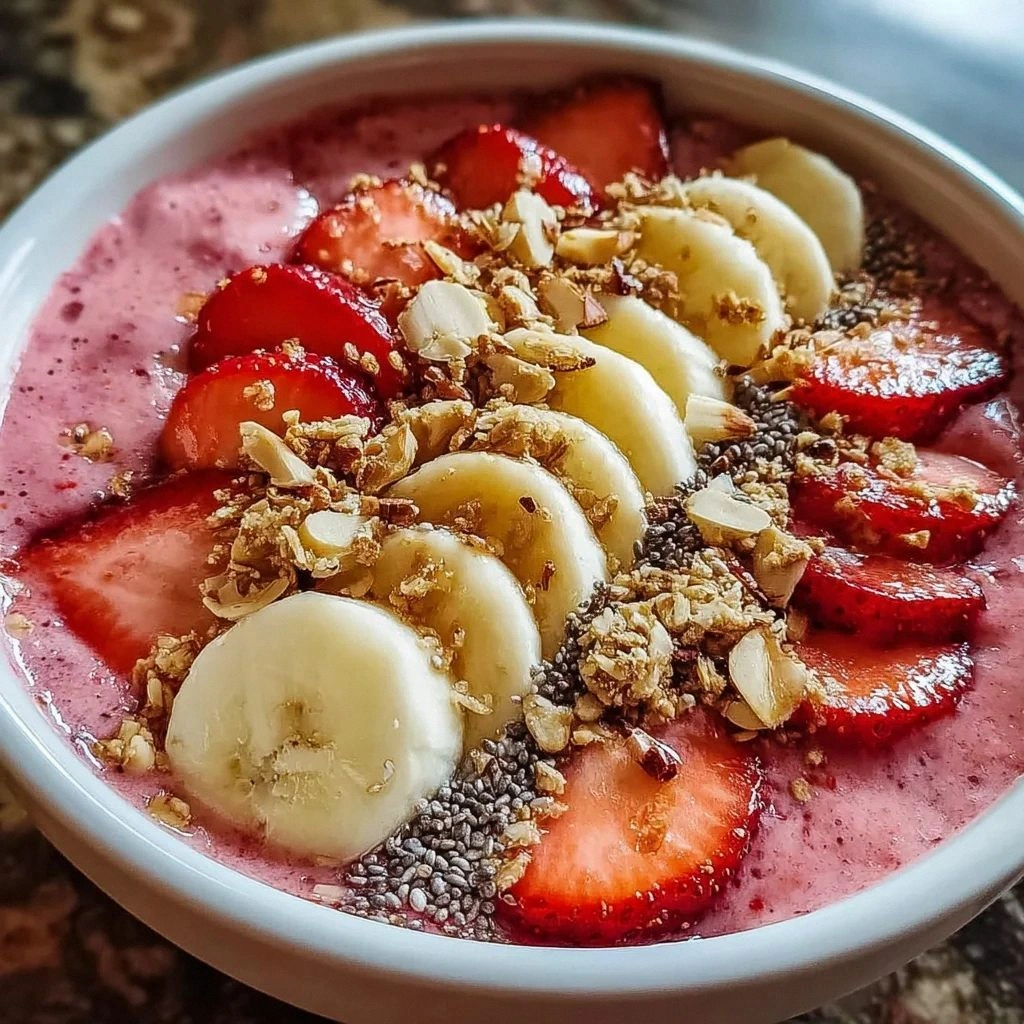
Time to build the base layer: sprinkle granola in a crescent shape covering roughly one-third of the surface, starting from the rim and moving toward the center. This creates visual balance and ensures every spoonful gets some crunch. The granola should sit on top like it's posing for a photoshoot, not sink into the smoothie like it's afraid of heights. Next, arrange your fresh fruit—slice strawberries paper-thin so they curl naturally, creating little edible rosettes that look like you spent way more time than you actually did. Banana slices should be thin enough to see light through, making them pliable for artistic draping. If you're using blueberries or raspberries, place them in small clusters rather than scattering randomly—clusters create focal points that draw the eye and make the bowl look professionally styled.
Now for the nut and seed layer: while everything else was happening, your toasted nuts should have cooled completely—warm nuts will melt the surface and create oil slicks that ruin the visual effect. Roughly chop larger nuts like almonds or walnuts, but leave smaller ones like pistachios whole for textural variety. Sprinkle them in a diagonal line across the bowl, creating movement that makes the whole composition feel dynamic rather than static. Add chia seeds last, using a small spoon to create tiny concentrated areas rather than broadcasting them like you're feeding chickens. These little powerhouses will create visual texture and add pops of crunch when you least expect them.
The final flourish: hold your spoon of warmed almond butter about six inches above the bowl and drizzle in a back-and-forth motion, creating thin ribbons that solidify on contact with the cold surface. Move quickly but steadily—hesitation creates thick globs that look amateurish. The almond butter should create a lattice pattern that looks intentional, not like you accidentally spilled something. If you want to get fancy, use a toothpick to drag through the almond butter lines, creating feather patterns that look like you went to culinary school. Work fast here—every second the bowl sits out is a second closer to melt-down. The entire topping process should take under two minutes once you get the rhythm down.
Serve immediately with a long spoon—preferably chilled in the freezer for thirty seconds first. The first bite should be a perfect ratio: some smoothie, some granola, some fresh fruit, some nuts, that almond butter ribbon tying everything together. If you've done everything right, you'll get crunch from the granola, creaminess from the smoothie, freshness from the fruit, richness from the almond butter, and tiny pop-explosions from the chia seeds. Your brain won't know what to process first, so it'll just register pure happiness. Don't be surprised if you find yourself closing your eyes involuntarily—that's your body's way of saying "pay attention, something important is happening here."
Storage isn't really a thing here—this is a serve-immediately masterpiece that starts degrading the second it's assembled. But if you must prep ahead, blend the smoothie base and store it in an airtight container in the freezer for up to three days. Let it sit at room temperature for ten minutes before stirring vigorously and proceeding with toppings. The granola can be toasted and stored in an airtight jar for a week, nuts and seeds for two weeks, and almond butter keeps forever in the fridge. Fresh fruit should be sliced just before serving—pre-cut fruit oxidizes and turns brown, looking like it's been through a food processor battle. Honestly, though, the whole point of this recipe is the immediacy of it all. It's five minutes of meditation disguised as breakfast preparation, a moment to be present while you create something beautiful and nourishing.
That's it—you did it. But hold on, I've got a few more tricks that'll take this to another level...
Insider Tricks for Flawless Results
The Temperature Rule Nobody Follows
Here's where most home cooks sabotage themselves: they blend everything at room temperature and wonder why their smoothie bowl looks like it's crying. Temperature is everything in this game. Your frozen strawberries should come straight from the freezer, but here's the counterintuitive part—let them sit for exactly four minutes before blending. This isn't some arbitrary Instagram nonsense; it's because ice crystals need time to form a micro-thaw layer that helps everything blend smoothly. Too short and you're chewing frozen gravel. Too long and you've made pink milk. I learned this the hard way after three months of daily experiments that left my kitchen looking like a strawberry crime scene. The bowl must be frozen solid, the spoon should be chilled, and if you're really serious, keep your toppings in the fridge too. Warm granola will create condensation that makes everything soggy, and room-temperature nuts will weep oil all over your beautiful creation. Think of it like making ice cream—every component needs to stay as cold as possible without being frozen solid.
Why Your Nose Knows Best
Before you even taste anything, smell it. Seriously, stick your nose in the blender and take a deep breath. The aroma should hit you with bright strawberry first, then a subtle floral note from the pears, and finally a nutty undertone from the almond butter. If all you smell is cold, add a pinch of sea salt and blend again. Salt doesn't make things salty—it makes things taste more like themselves. It's like turning up the volume on your taste buds. If the strawberries smell flat or dull, they were probably frozen too long or thawed and refrozen, which breaks down the aromatic compounds. In that case, add a squeeze of lemon juice to wake everything up. The lemon won't make it taste lemony—it just brightens the strawberry flavor like sunshine after rain. Trust your nose over your eyes here; I've made gorgeous-looking bowls that tasted like disappointment because I skipped the sniff test.
The 5-Minute Rest That Changes Everything
After you blend but before you assemble, let the smoothie base rest in the blender for exactly five minutes. I know, I know—you're hungry and it looks ready. But something magical happens in those five minutes: the pectin from the pears activates, creating a network that holds everything together like microscopic spiderwebs. The temperature equalizes slightly, so you don't get icy spots next to melty spots. And most importantly, the air bubbles that got whipped in during blending have time to rise and escape, creating a denser, more luxurious texture. Stir gently before pouring to redistribute everything evenly. A friend tried skipping this step once—let's just say her toppings performed a synchronized swimming routine straight to the bottom of the bowl. Patience isn't just a virtue here; it's the difference between amateur hour and breakfast that looks like it came from a five-star spa.
The Golden Ratio Secret
After three months of daily experiments that made my blender sound like it was filing for divorce, I discovered the golden ratio: 2 cups frozen fruit to 3 tablespoons liquid to 1 piece of canned pear. Not 2.5 cups, not 4 tablespoons—exactly those measurements. This creates the perfect balance where everything blends smoothly but stays thick enough to hold toppings hostage. Too much liquid and you've made a milkshake. Too little and your blender will sound like it's chewing gravel while your toppings sink like they're in quicksand. The pear acts as both sweetener and thickener, replacing the need for honey or maple syrup that would make your blood sugar throw a tantrum an hour later. Write this ratio on a sticky note and put it on your blender—future you will thank present you when you're stumbling around half-awake trying to make breakfast.
Why Timing Beats Talent
Here's a truth that'll free you from smoothie anxiety forever: timing matters more than artistic ability. The entire assembly process should take under three minutes once your base is blended. Work in this order: granola first (it needs to sit on top, not sink), then fresh fruit arranged in clusters, then nuts and seeds in a diagonal line, finally almond butter drizzle in a back-and-forth motion. Don't overthink it—your brain recognizes patterns, and a simple diagonal line looks more intentional than random scattering. If you hesitate or second-guess yourself, the smoothie starts melting and everything slides around like it's on a Slip 'N Slide. Trust your instincts and move with confidence. Some of my most beautiful bowls happened when I was running late and just threw things together quickly. Breakfast is about nourishing yourself, not creating museum pieces. The people who eat with their eyes first are usually the same ones who forget to actually taste their food.
Creative Twists and Variations
This recipe is a playground. Here are some of my favorite ways to switch things up:
Tropical Paradise Edition
Swap the frozen strawberries for an equal amount of frozen mango chunks, use the juice from a can of pineapple instead of pear juice, and replace almond butter with coconut butter that's been warmed until pourable. Top with toasted coconut flakes, macadamia nuts, and fresh kiwi sliced into paper-thin rounds. The mango creates an even thicker texture than strawberries, and the coconut butter adds a richness that makes you feel like you're eating breakfast on a beach in Thailand. Add a tiny pinch of sea salt to bring out the tropical flavors, and if you're feeling fancy, a drop of vanilla extract makes the whole thing taste like a sophisticated piña colada.
Green Goddess Version
Keep the strawberries but add a handful of frozen spinach—it won't turn the whole thing green, just creates a beautiful pink-speckled effect. Use pear juice as normal but add a teaspoon of matcha powder to the liquid before blending for earthy depth and a caffeine kick that coffee can't match. Top with pumpkin seeds, hemp hearts, and fresh mint chiffonade. The matcha adds a grassy note that plays surprisingly well with strawberries, creating a flavor profile that tastes like spring in a bowl. The spinach disappears completely texture-wise but adds iron and folate, making this the rare breakfast that tastes like dessert while acting like a multivitamin.
Chocolate Covered Strawberry
Add one tablespoon of raw cacao powder to the blender with the strawberries—it deepens the berry flavor without making it taste like chocolate milk. Use hazelnut butter instead of almond for a Nutella vibe that feels indulgent but stays healthy. Top with cacao nibs for bitter chocolate crunch, chopped hazelnuts, and fresh raspberries for tart contrast. The cacao powder adds antioxidants and creates a complex flavor that tastes like expensive European chocolate, while the hazelnut butter brings richness that makes this feel like dessert for breakfast. A tiny pinch of cinnamon adds warmth and makes the whole thing taste like you've been transported to a Belgian chocolate shop.
Savory-Sweet Fusion
This one sounds weird but trust me: add a 1/4 teaspoon of balsamic vinegar to the pear juice before blending. The acid intensifies the strawberry flavor in ways that'll make your taste buds do a double-take. Use pistachio butter for its natural sweetness and beautiful green color, and top with fresh basil chiffonade, cracked black pepper, and a drizzle of aged balsamic. The vinegar adds depth without making it taste salad-like, and the basil brings a fresh note that makes the strawberries taste like they were picked five minutes ago. The black pepper adds just enough heat to make things interesting—a flavor profile that keeps you coming back for more because your brain can't quite categorize it.
Protein Powerhouse
Add two tablespoons of vanilla protein powder to the blender, but reduce the frozen strawberries by 1/4 cup to maintain the perfect texture. Use the juice from canned peaches instead of pears for a different sweetness profile, and replace almond butter with peanut butter for a PB&J vibe that'll fuel you through the toughest morning workout. Top with chopped peanuts, hemp hearts, and fresh peach slices. The protein powder makes this thick enough to eat with a fork, and the peanut butter adds staying power that keeps you satisfied until dinner. It's like eating a peanut butter and jelly sandwich that went to finishing school and came back as breakfast royalty.
Autumn Harvest
Use frozen strawberries mixed with an equal amount of frozen peaches, add 1/2 teaspoon of pumpkin pie spice to the blender, and use the juice from canned pears plus a tablespoon of maple syrup. Top with toasted pecans, dried cranberries, and fresh apple slices that have been tossed in lemon juice to prevent browning. The warm spices make this taste like fall in a bowl, while the maple syrup adds a caramel note that plays beautifully with the fruit. It's like someone took your grandmother's cobbler and turned it into a breakfast that won't put you back to sleep.
Storing and Bringing It Back to Life
Fridge Storage
Let's be real: this isn't a make-ahead recipe. But life happens, sometimes you need to prep components ahead. The smoothie base can be blended and stored in an airtight container in the freezer for up to three days. Press plastic wrap directly onto the surface before sealing to prevent ice crystals from forming. When ready to use, let it sit at room temperature for ten minutes, then stir vigorously with a fork to reincorporate everything. It won't be quite as fluffy as fresh-blended, but it'll still hold toppings and taste incredible. Never store assembled bowls—they'll turn into a soggy mess that'll make you cry into your breakfast.
Freezer Friendly
Portion the smoothie base into silicone muffin cups and freeze solid, then pop them out and store in a zip-top bag. These frozen pucks blend back to life in about thirty seconds with a splash of milk or water, making weekday mornings feel like you have a personal smoothie chef. The toppings can be prepped ahead too: toast a big batch of nuts and seeds, let them cool completely, then store in an airtight jar for up to two weeks. Fresh fruit should be sliced just before serving—pre-cut fruit oxidizes and turns brown, looking like it's been through a food processor battle.
Best Reheating Method
Reheating a smoothie bowl? Sacrilege. But if you've got leftover smoothie base that's frozen solid, the best method is patience: transfer it to the fridge for twenty minutes, then stir vigorously. Microwaving turns it into hot pink soup, and leaving it on the counter creates weird temperature gradients where the edges melt while the center stays frozen. For toppings that have gone stale, revive them in a dry pan over medium heat for two minutes, shaking constantly. They'll crisp right back up and taste like you just toasted them fresh. The almond butter can be revived with a splash of hot water and vigorous stirring—add water a teaspoon at a time until it's drizzle-able again.